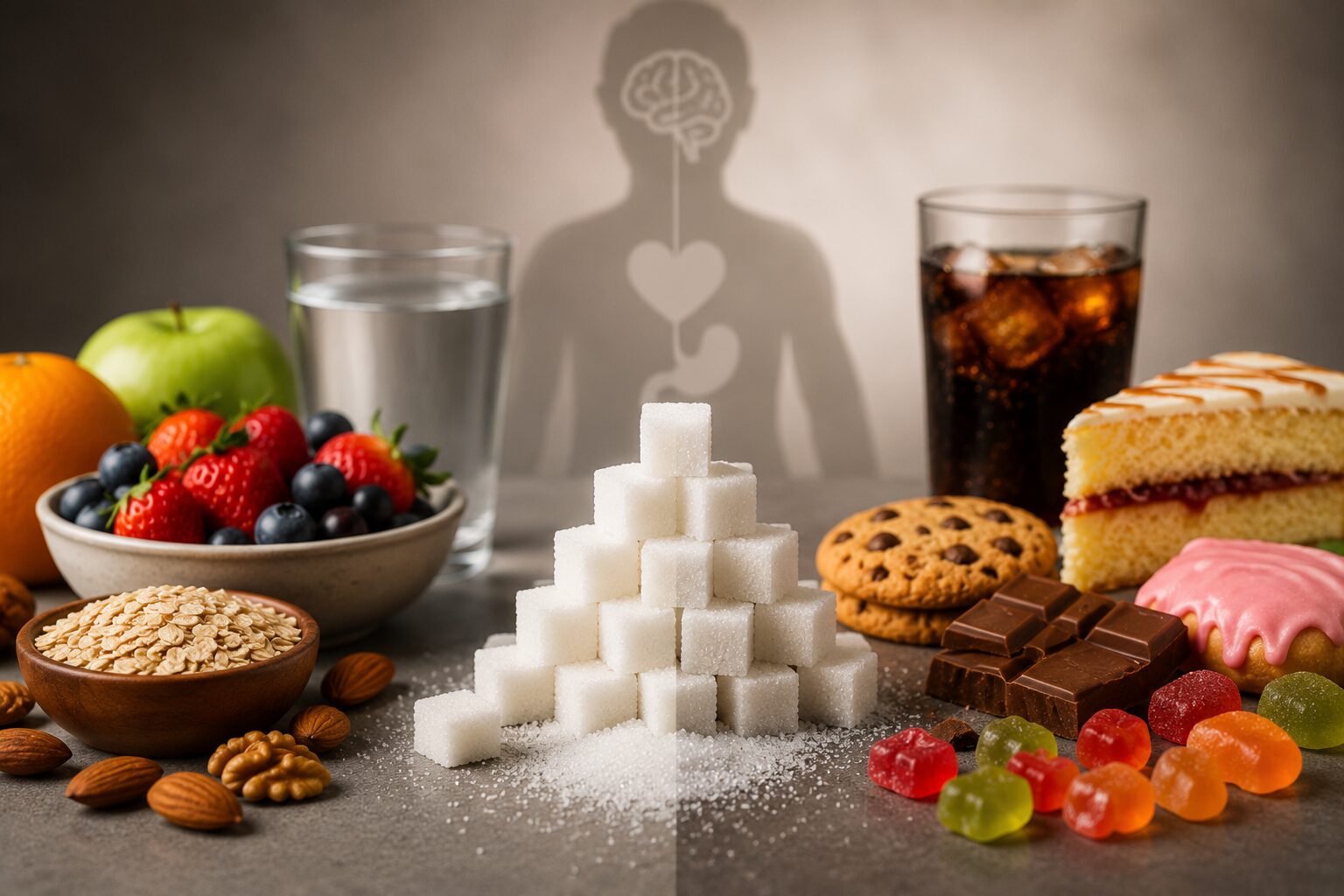
Most people know that eating too much sugar isn’t healthy, but many don’t realize how many parts of the body added sugar can affect. Beyond weight gain, excess added sugar has been linked to heart disease, fatty liver disease, high blood pressure, chronic inflammation, and type 2 diabetes. The biggest problem is that much of today’s sugar is hidden in processed foods that don’t even taste very sweet.
Understanding where added sugar hides—and how it impacts your body—can help you make healthier choices without giving up all the foods you enjoy.
Natural Sugar vs. Added Sugar
Not all sugar is bad.
Many whole foods naturally contain sugar, including:
- Fruits
- Vegetables
- Whole grains
- Dairy products
These foods also provide important nutrients such as fiber, vitamins, minerals, antioxidants, and protein. Because they digest more slowly, they provide a steady supply of energy and are associated with lower risks of heart disease, type 2 diabetes, and some cancers.
Added sugar is different. It is sugar manufacturers add during processing to improve flavor, texture, or shelf life. Unlike naturally occurring sugar, added sugar provides calories with little nutritional value.
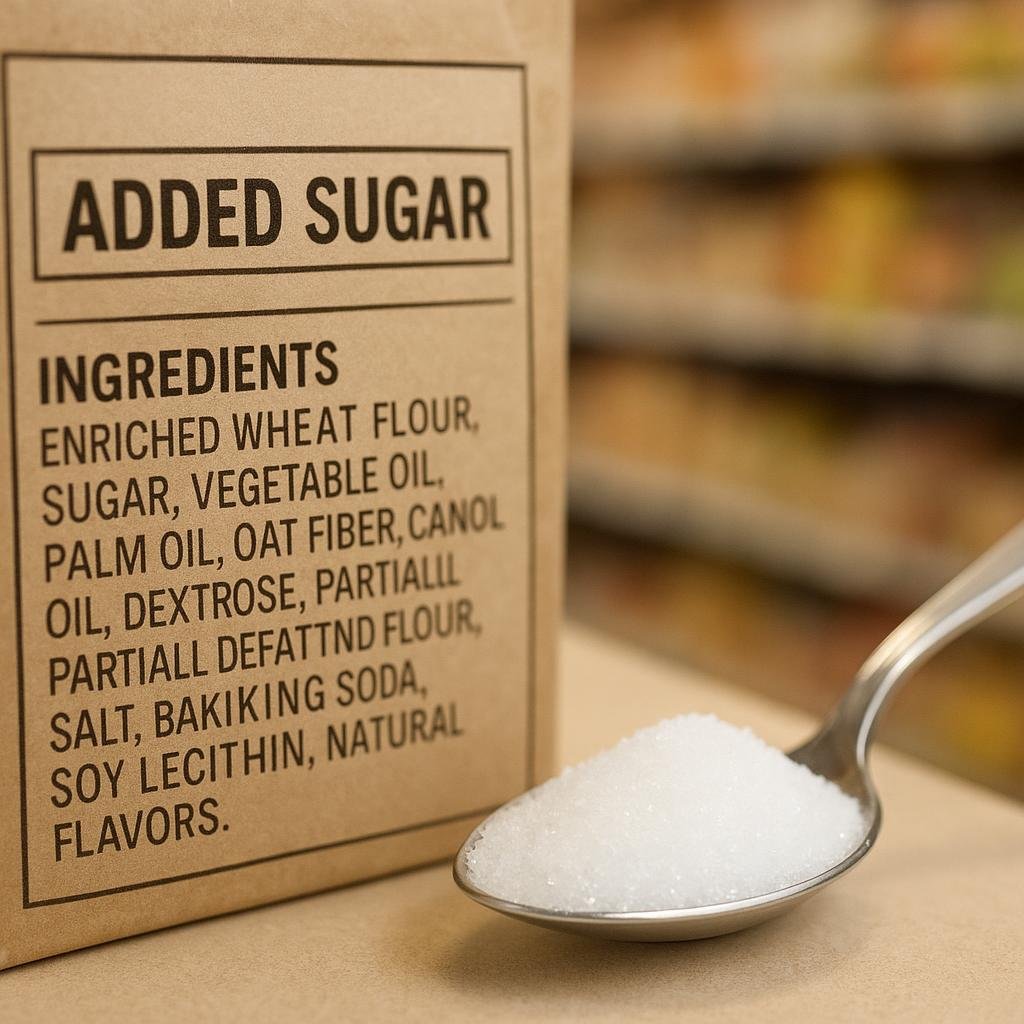
Where Added Sugar Hides
Everyone expects sugar in cookies, candy, cakes, and soda. But it is also commonly found in foods that aren’t obviously sweet.
Hidden sources include:
- Bread
- Breakfast cereals
- Granola bars
- Flavored yogurt
- Pasta sauce
- Ketchup
- Barbecue sauce
- Salad dressings
- Soup
- Processed meats
- Fruit drinks
- Sports drinks
- Energy drinks
Many Americans consume around 17 teaspoons of added sugar every day, with sugary beverages and baked goods being the largest contributors.
What Sugar Does to Your Body
Your Brain
Eating sugar triggers the release of dopamine, a chemical involved in pleasure and reward. This is one reason sugary foods can be so appealing and why many people crave them repeatedly.
While enjoying sweets occasionally is perfectly normal, regularly eating large amounts of added sugar may strengthen cravings and make healthier foods less satisfying.
Your Blood Sugar
After you eat sugar, your blood glucose rises and your pancreas releases insulin, allowing sugar to enter your cells for energy.

Occasional increases are normal. However, frequent spikes from diets high in added sugar place extra stress on your body’s ability to regulate blood sugar over time.
Your Liver
When your body receives more sugar than it needs for immediate energy, the liver converts some of it into fat.
Over many years, excess added sugar may contribute to non-alcoholic fatty liver disease (NAFLD), which is associated with insulin resistance, type 2 diabetes, and increased cardiovascular risk.
Your Heart
Many people associate sugar with weight gain, but its effects extend much further.
Research has linked higher added sugar intake with increased risks of:
- Heart disease
- Stroke
- High blood pressure
- Chronic inflammation
- Elevated triglycerides
- Weight gain
- Type 2 diabetes
Large population studies have found that people consuming higher amounts of added sugar have a greater risk of cardiovascular disease than those consuming less.
Sugary Drinks Are One of the Biggest Problems
Calories from sugary drinks don’t satisfy hunger as well as calories from solid foods.
This makes it easy to consume hundreds of extra calories without realizing it.
Examples include:
- Soda
- Sweet tea
- Fruit drinks
- Lemonade
- Energy drinks
- Sports drinks
- Sweetened coffee beverages
Replacing even one sugary drink each day with water or unsweetened tea can significantly reduce added sugar intake.
High-Fructose Corn Syrup
Another common source of added sugar is high-fructose corn syrup (HFCS).
HFCS is widely used because it’s inexpensive and blends easily into processed foods. It’s commonly found in:
– Soft drinks
– Candy
– Packaged desserts
– Sweetened cereals
– Sweet sauces
– Processed snacks
Like other added sugars, diets high in HFCS have been associated with fatty liver disease, insulin resistance, elevated triglycerides, and increased risk of type 2 diabetes.
How Much Added Sugar Is Too Much?
Health experts recommend keeping added sugar as low as possible.
Current dietary guidelines encourage limiting added sugar throughout the day, and newer recommendations suggest avoiding meals that contain large amounts of added sugar.
Even if a product contains only a few grams of added sugar per serving, eating multiple servings can quickly increase your intake.
Read the Nutrition Label
One of the easiest ways to reduce sugar is to check the Nutrition Facts label.
Pay attention to:
- Serving size
- Servings per container
- Added Sugars
Also remember that sugar appears under many different names, including:
- Cane sugar
- Brown sugar
- Corn syrup
- High-fructose corn syrup
- Honey
- Agave syrup
- Maple syrup
- Dextrose
- Fructose
- Glucose
- Sucrose
- Maltose
Simple Ways to Reduce Sugar
You don’t need to eliminate sugar completely.
Instead, try these simple habits:
- Drink water or unsweetened tea instead of sugary drinks.
- Choose whole fruits instead of fruit-flavored snacks.
- Eat more vegetables, beans, oats, and whole grains.
- Pick plain yogurt and add fresh fruit yourself.
- Save desserts for occasional treats instead of everyday foods.
- Read nutrition labels before buying packaged products.
Small changes repeated every day can make a meaningful difference over time.
Use InSpoon to Spot Hidden Sugar
Added sugar often hides in products that look healthy.
The InSpoon app makes shopping easier by showing added sugar and other important nutrition information when you scan a product. Instead of comparing dozens of nutrition labels yourself, you can quickly identify products with less added sugar and make healthier choices.

Download InSpoon:
Final Thoughts
Sugar itself isn’t the problem—your body depends on carbohydrates for energy. The real concern is too much added sugar, especially from highly processed foods and sugary beverages.
Choosing more whole foods, drinking fewer sugary drinks, reading nutrition labels, and being aware of hidden sugars can help reduce your risk of heart disease, fatty liver disease, obesity, and type 2 diabetes.
Healthy eating doesn’t require perfection. Making small, consistent improvements is often the most effective way to protect your long-term health.