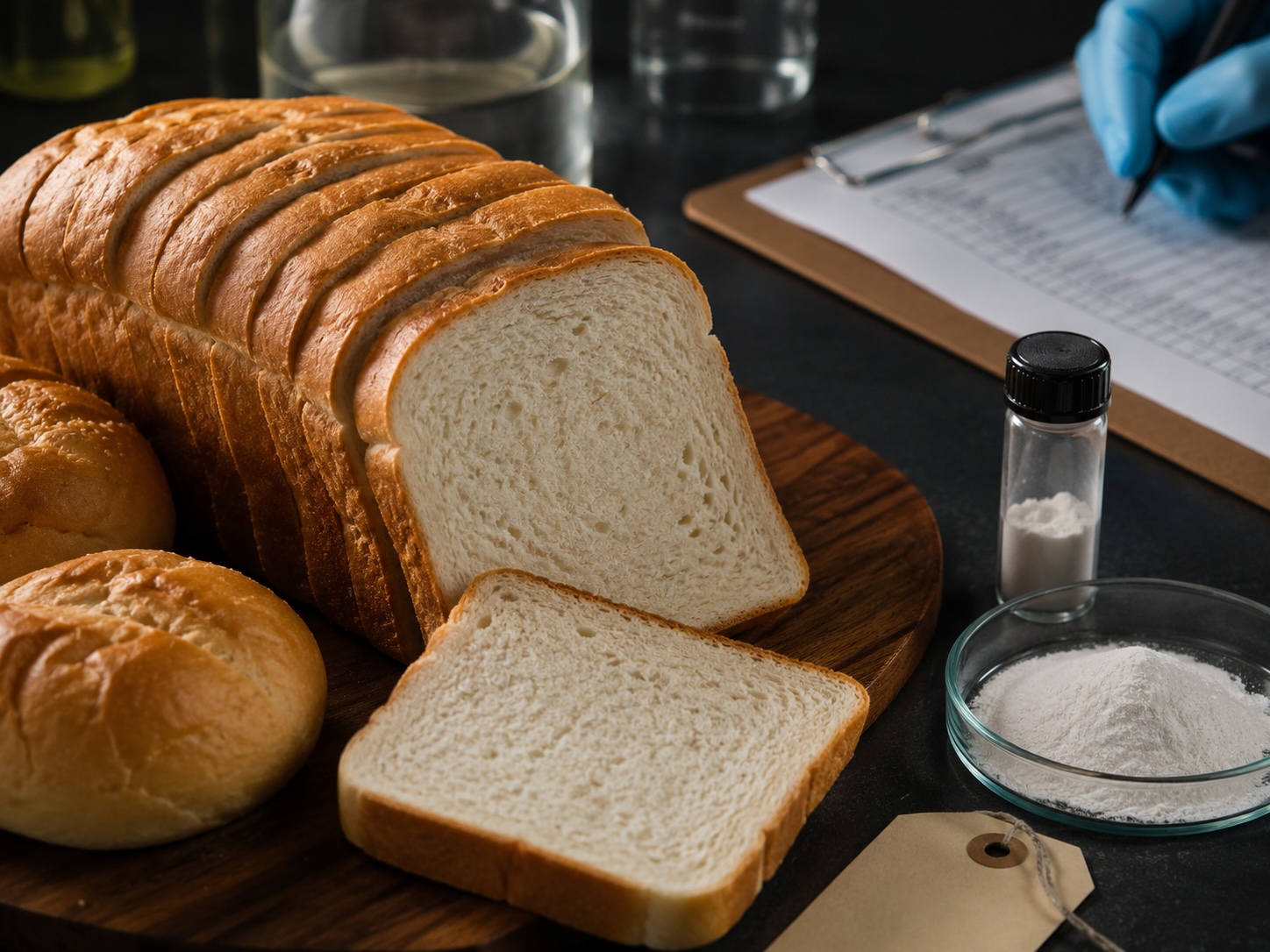
When you buy a loaf of bread, you probably expect simple ingredients like flour, water, yeast, and salt. But some packaged baked goods may also contain potassium bromate—a flour additive that has raised health concerns for decades.
Potassium bromate is used to strengthen dough, improve texture, and help bread rise higher. While it offers benefits for commercial baking, numerous scientific studies have linked the chemical to cancer in laboratory animals. Because of these concerns, many countries have banned its use, yet it remains legal in most of the United States.
Here’s what you should know about potassium bromate, why it’s controversial, and how to avoid it.
What Is Potassium Bromate?
Potassium bromate is a chemical added to flour during bread production. It acts as a dough improver, making dough stronger and more elastic.

Manufacturers use it because it helps:
- Increase loaf volume
- Improve bread texture
- Strengthen dough
- Produce more consistent baked goods
You’ll most often find it in commercial products such as:
- Bread
- Hamburger buns
- Hot dog buns
- Rolls
- Bagels
- Pizza crusts
- Pastries
- Flour tortillas
On ingredient labels, it usually appears as potassium bromate or bromated flour.
Why Is Potassium Bromate Controversial?
The controversy isn’t about what potassium bromate does during baking—it’s about what may remain in the finished product.
The baking industry has long argued that potassium bromate is converted into potassium bromide, a different compound that is not considered carcinogenic, during baking.
However, several studies have found that residual potassium bromate can still be detected in some baked products after baking, suggesting the conversion may not always be complete.
This has led many scientists and regulators to question whether consumers could still be exposed.
Is Potassium Bromate Linked to Cancer?
The strongest evidence comes from animal studies.
Research has shown that laboratory animals exposed to potassium bromate developed higher rates of tumors, including cancers affecting the:
- Kidneys
- Thyroid
- Abdominal lining (peritoneum)
Because of this evidence, the International Agency for Research on Cancer (IARC) classified potassium bromate as “possibly carcinogenic to humans” in 1999.

It’s important to understand what this classification means.
It does not prove that potassium bromate causes cancer in humans at the levels found in food. Instead, it means there is sufficient evidence of cancer in animals and limited evidence in humans, making the chemical a potential human carcinogen.
Other Potential Health Concerns
Cancer isn’t the only concern researchers have investigated.
Animal and laboratory studies have linked potassium bromate to:
- Kidney damage
- Thyroid abnormalities
- Oxidative stress
- DNA damage (genotoxicity)
- Liver damage
- Hearing loss
- Changes in brain function
- Reproductive effects
Much of this evidence comes from laboratory or animal studies, so the extent to which these findings apply to typical human dietary exposure remains uncertain. More human research is needed.
Why Do Other Countries Ban It?
Because of these safety concerns, many governments have decided not to allow potassium bromate in food.
Countries that have banned its use include:
- Canada
- Brazil
- United Kingdom
- European Union countries
- China
- India
- South Korea
- Argentina
- Nigeria
- Peru
- Sri Lanka
Their approach follows the precautionary principle—when a food additive has credible evidence of harm and safer alternatives exist, it is removed from the food supply.
What About the United States?
Potassium bromate is still permitted in most of the U.S.
The FDA originally approved it for use in food decades ago and has not conducted a comprehensive modern safety review of the additive in many years.
However, several states have begun taking action.
### California
California’s Food Safety Act bans the manufacture, sale, and distribution of foods containing potassium bromate. The law also prohibits several other controversial additives, including brominated vegetable oil (BVO), propylparaben, and Red Dye No. 3.
Utah
Utah has prohibited potassium bromate in school meals, along with several other food additives.
Other States
States including New York and Florida have also proposed or supported restrictions on potassium bromate, reflecting growing concern over its safety.
Which Foods May Contain Potassium Bromate?
Potassium bromate is most commonly found in commercially produced baked goods.
Examples include:
- Sandwich bread
- Hamburger buns
- Hot dog buns
- Dinner rolls
- Bagels
- Pizza dough
- Flour tortillas
- Commercial pastries
Many manufacturers have already switched to safer alternatives, so not every packaged bread contains potassium bromate.
The easiest way to know is to read the ingredient list.

How Can You Avoid It?
Reducing your exposure is straightforward.
Read Ingredient Labels
Look for:
- Potassium bromate
- Bromated flour
If either appears, consider choosing another brand.
Buy Bread Without Bromated Flour
Many bakeries and food companies now advertise:
- Unbromated flour
- No potassium bromate
These products achieve similar baking quality using alternative dough conditioners.
Choose Fresh Bakery Bread
Many local bakeries and artisan bread makers don’t use potassium bromate, although it’s still worth asking if you’re unsure.
Eat More Whole Foods
The fewer highly processed foods you eat, the less likely you are to consume unnecessary food additives.
How InSpoon Can Help
Food labels aren’t always easy to read, especially when you’re trying to remember dozens of ingredient names.
The InSpoon app lets you scan packaged foods and quickly identify additives like potassium bromate, helping you make more informed grocery decisions without spending time reading every ingredient list.
Download InSpoon:
Frequently Asked Questions
Why do manufacturers use potassium bromate?
It strengthens dough, improves texture, and helps bread rise higher, making commercial baking more consistent.
Does every loaf of bread contain potassium bromate?
No. Many manufacturers have stopped using it voluntarily, and products made with unbromated flour are widely available.
Is potassium bromate banned everywhere?
No. It remains legal in much of the United States, although many countries—and some U.S. states—have prohibited its use because of safety concerns.
Should I avoid foods containing potassium bromate?
Many health experts recommend choosing products made without potassium bromate, especially since comparable alternatives are readily available.
Final Thoughts
Potassium bromate has been used in commercial baking for more than a century because it improves dough and creates lighter, higher-rising bread. However, decades of research have raised important questions about its safety.
Animal studies have linked the additive to cancer and other health effects, leading many countries to ban its use. While U.S. regulators still allow potassium bromate in most states, growing numbers of states are beginning to restrict it.
Fortunately, avoiding potassium bromate is simple. Reading ingredient labels, choosing products made with unbromated flour, and selecting minimally processed foods can help reduce your exposure while still allowing you to enjoy fresh, delicious bread.