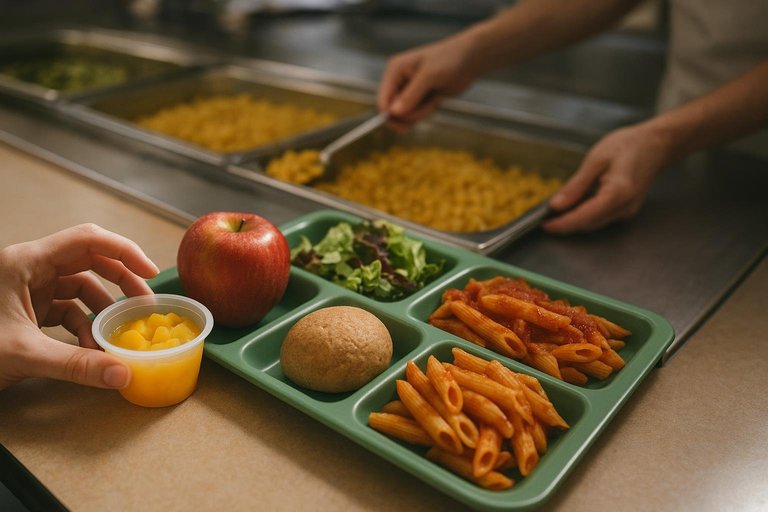
For millions of children, school meals provide a significant portion of their daily nutrition. In the United States alone, the National School Lunch Program serves millions of students every school day, helping reduce food insecurity and ensuring children have access to regular meals.

But there’s an important question that often gets overlooked:
Are school meals always healthy?
While school meal programs play a vital role in preventing hunger, nutrition experts increasingly argue that simply providing enough calories isn’t enough. The quality of those calories—and the level of processing—may have long-term effects on children’s health, eating habits, and academic performance.
Here’s what current research says.
Why School Meals Matter
School meal programs exist for a good reason.
For many children, especially those from low-income families, breakfast and lunch at school may provide a large share of their daily nutrition.
Research has shown that well-designed school meal programs can:
- Reduce food insecurity
- Improve growth and development
- Support learning and concentration
- Increase school attendance
- Promote healthier eating habits
These benefits are especially important because childhood nutrition influences health well into adulthood.
The Growing Challenge: Ultra-Processed Foods
Over the past few decades, ultra-processed foods (UPFs) have become more common in schools around the world.
Ultra-processed foods are industrially manufactured products that often contain:
- Refined starches
- Added sugars
- Excess sodium
- Unhealthy fats
- Artificial flavors
- Colors
- Emulsifiers
- Preservatives
Examples include:
- Pizza
- Corn dogs
- Chicken nuggets
- Sweetened breakfast pastries
- Packaged snacks
- Sugary drinks
- Cookies
- Flavored desserts
These foods are often inexpensive, easy to prepare, and have a long shelf life—making them attractive for large school food programs.
Why Are Ultra-Processed Foods a Concern?
A growing body of research links diets high in ultra-processed foods with increased risks of:
- Obesity
- Type 2 diabetes
- Heart disease
- High blood pressure
- Some cancers
- Digestive diseases
Large population studies have also associated higher intake of ultra-processed foods with increased overall mortality.
It’s important to remember that these studies generally show associations, meaning they cannot prove that ultra-processed foods directly cause these diseases. However, the evidence has become strong enough that many public health experts recommend limiting them whenever possible.
Meeting Nutrition Standards Isn’t Always Enough
Many parents assume foods served at school must be healthy because they meet government nutrition requirements.
In reality, nutrition standards often focus on nutrients such as:
- Calories
- Saturated fat
- Sodium
- Added sugar
- Protein
These standards are important—but they don’t necessarily consider how processed a food is.
For example, foods such as:
- Pizza
- Corn dogs
- Breaded chicken products
may still qualify under school meal guidelines if they meet nutritional targets.
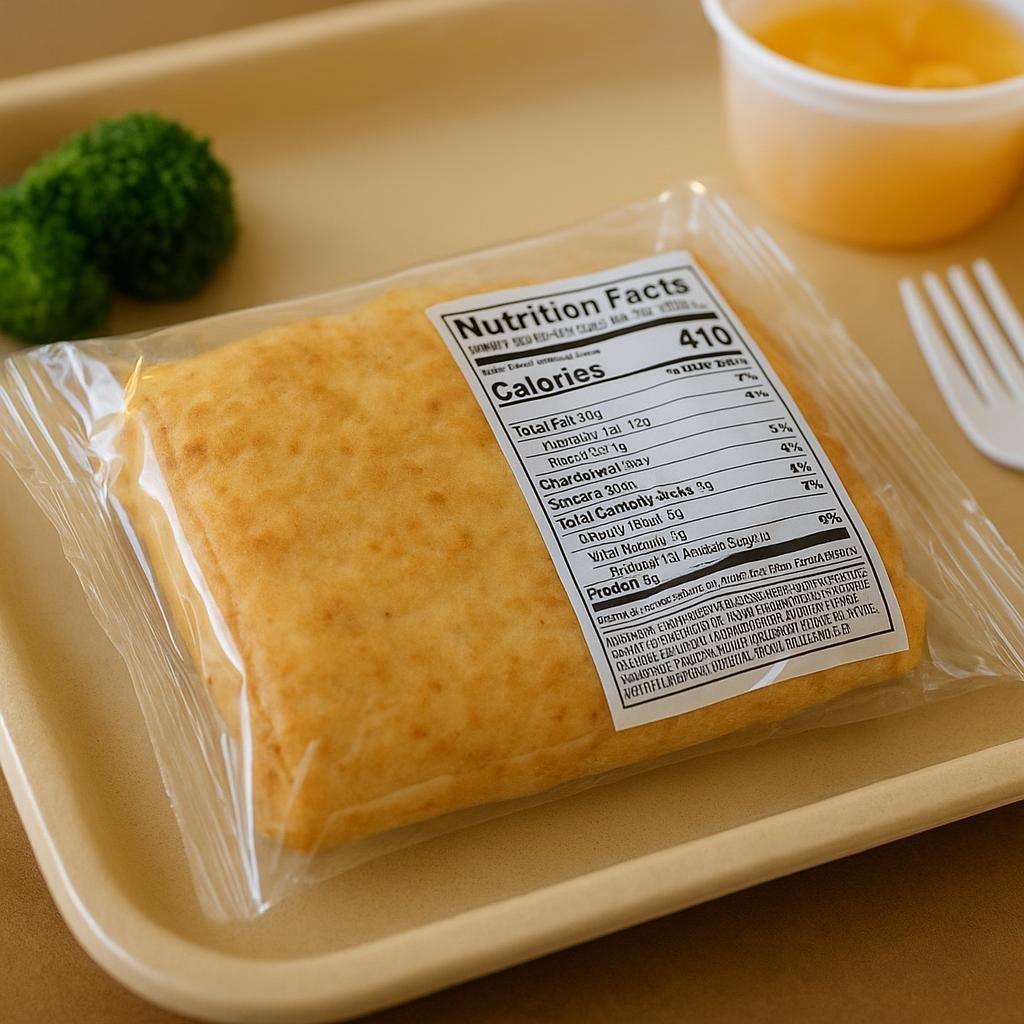
As a result, a meal can technically satisfy nutrition regulations while still relying heavily on processed ingredients.
Why Schools Use Processed Foods
Schools face many practical challenges that make fresh cooking difficult.
These include:
- Limited budgets
- Large numbers of students
- Short lunch periods
- Limited kitchen facilities
- Food safety concerns
- Food waste
- Staffing shortages
Frozen and pre-packaged foods solve many of these logistical problems because they are:
- Easy to store
- Quick to prepare
- Consistent in quality
- Less likely to spoil
For many school districts, these practical realities strongly influence menu planning.
Healthy School Meals Can Make a Difference
Research suggests healthier school meals may provide benefits beyond simply reducing hunger.
Nutritious meals may help support:
– Better concentration
– Improved learning
– Stable energy throughout the day
– Healthy growth
– Healthy body weight
– Better long-term eating habits
Children who regularly eat fruits, vegetables, whole grains, beans, and minimally processed foods may be more likely to continue those habits into adulthood.
Because eating habits develop early in life, school meals offer an opportunity to build lifelong healthy behaviors.
Not Every Country Takes the Same Approach
Different countries have adopted different school meal strategies.
Some programs emphasize freshly prepared meals using minimally processed ingredients whenever possible.
Others rely more heavily on packaged or processed products because of cost or infrastructure limitations.
Some countries also provide ingredients such as:
- Beans
- Rice
- Eggs
- Whole grains
- Canned fish
- Vegetable oils
that schools cook on-site instead of serving ready-made meals.
Each approach has advantages and challenges, particularly when serving millions of children every day.
What Does the Evidence Say?
The relationship between school food and childhood obesity is more complex than many headlines suggest.
Some research has found that schools offering more junk food options do not necessarily see higher rates of obesity among elementary school students after accounting for other important factors such as family environment and baseline weight. One large study found that while children purchased more junk food when it was available at school, this did not translate into significantly higher BMI or obesity rates in fifth graders. Researchers suggested children may compensate by eating differently outside school, though the study also acknowledged limitations and called for further research.
This doesn’t mean junk food is healthy.
Instead, it highlights an important point:
Body weight is only one measure of health.
A diet high in ultra-processed foods may still affect:
- Overall diet quality
- Nutrient intake
- Dental health
- Blood sugar control
- Long-term eating habits
These outcomes may not always appear immediately as changes in body weight.
How Parents Can Help
Parents don’t have complete control over school meals, but there are ways to encourage healthier eating.
Some simple ideas include:
- Pack fresh fruits when possible.
- Offer vegetables at dinner to balance the day.
- Encourage water instead of sugary drinks.
- Discuss nutrition without labeling foods as “good” or “bad.”
- Read school lunch menus together.
- Involve children in grocery shopping and meal preparation.
Healthy habits develop over time through consistent exposure—not perfection.
How InSpoon Can Help
Many packaged foods served both inside and outside schools look similar but vary greatly in nutrition and ingredients.
The InSpoon app helps families quickly compare packaged foods by scanning barcodes and reviewing nutrition information, ingredient lists, and food additives before making a choice.

Whether you’re packing lunches or shopping after school, having clear information can make healthier decisions easier.
Download InSpoon:
Frequently Asked Questions
Are school lunches unhealthy?
Not necessarily. Many school meals provide important nutrients and help prevent hunger. However, some menus rely heavily on ultra-processed foods, which many health experts recommend limiting.
Why do schools use processed foods?
Processed foods are often less expensive, easier to store, faster to prepare, and require fewer staff and kitchen resources.
Do ultra-processed foods always cause obesity?
No. Body weight depends on many factors, including overall diet, physical activity, genetics, sleep, and lifestyle. Ultra-processed foods are associated with poorer health outcomes, but obesity cannot be explained by a single food or meal.
What should children eat instead?
A balanced diet emphasizing:
– Fruits
– Vegetables
– Whole grains
– Beans
– Lean proteins
– Dairy or fortified alternatives
– Healthy fats
provides the nutrients children need for healthy growth and development.
Final Thoughts
School meal programs are essential for millions of children and play an important role in reducing hunger and supporting education.
At the same time, nutrition quality deserves just as much attention as calorie intake. While schools face real budget and logistical challenges, increasing the availability of minimally processed, nutrient-rich foods may help children develop healthier eating habits that last a lifetime.
Creating healthier school meals isn’t just about preventing obesity—it’s about giving every child the best opportunity to learn, grow, and thrive.